ADHD Treatment in Branford, CT
ADHD Psychiatrist for Branford, CT — When ADHD Is Affecting More Than Just Your Work
ADHD doesn't stay in the office. It follows you home. It shows up at dinner when you interrupt before your partner finishes their sentence. It's there when you forget a birthday you swore you'd remember, when you say something impulsive that you immediately regret, when you check out mid-conversation and your family doesn't understand why you seem so disengaged. None of that is intentional. But the people around you don't always know that, and over time it creates patterns that strain relationships — sometimes seriously. If you're in Branford and you're starting to see how ADHD is affecting the people closest to you, Sindhia Shyras, APRN can help. She's a board-certified Psychiatric Nurse Practitioner with nine years of experience in psychiatric care. She sees patients via telehealth across Connecticut and in-person at 2049 Silas Deane Hwy, Ste 209, Rocky Hill, CT 06067.
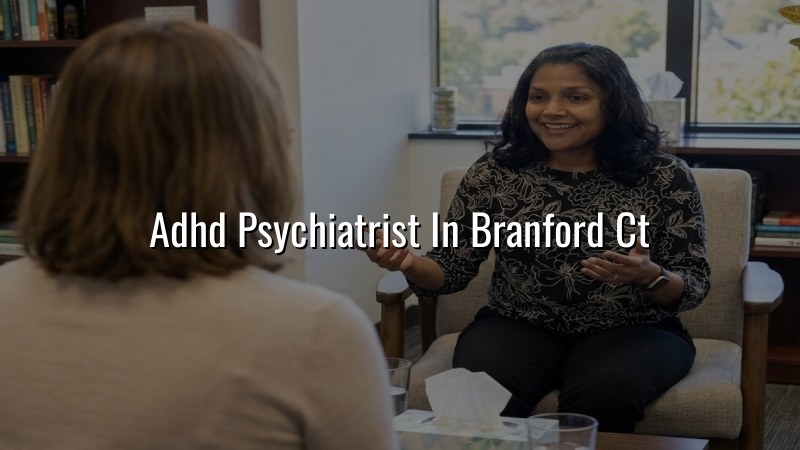
How ADHD Impulsivity Shows Up in Relationships
Impulsivity isn't just doing risky things without thinking. In relationships, it's subtler and more corrosive. It's jumping in with a response before you've heard the full picture — so your partner feels dismissed. It's making a financial decision without the conversation you both agreed to have. It's reacting sharply to something small because your emotional regulation is slower to kick in than your reaction. It's promising something you genuinely meant in the moment, and then forgetting by the next day. Each of these, on its own, seems manageable. Together, over months and years, they erode trust. Not because you're a bad partner. Because ADHD is doing damage you probably can't fully see — and that's exactly why getting it treated matters beyond just your own quality of life.
The Guilt Loop — and How Treatment Breaks It
Most people with ADHD feel guilty about these relationship patterns. They know they've interrupted again. They remember the forgotten thing. They catch themselves disengaging. And they feel terrible about it. But guilt alone doesn't fix ADHD — it just makes it heavier. The interrupting, forgetting, and impulsive reacting are symptoms, not character flaws. And when ADHD is treated — with the right medication and the right support — those symptoms often reduce significantly. People report being more present in conversations, less reactive, more able to follow through. The relationships don't fix themselves automatically, but the ADHD stopping to wreck them gives everything else a chance to breathe.
What Sindhia Looks at in the Evaluation
The first appointment is a full hour of conversation. Sindhia asks about symptoms, history, and — because she knows it matters — how things are going in your relationships and at home. She looks for co-occurring anxiety or depression, both of which are common in people with long-unmanaged ADHD. She asks about previous treatment and what worked or didn't. From there, she puts together a treatment plan that's actually built for your life — not a template. We accept Aetna, Cigna, Husky Health, Medicaid, United Healthcare, Anthem, ConnectiCare, and self-pay.
Frequently Asked Questions
Serving Branford, CT and all of Connecticut via telehealth.
Call 860-515-8689 or book online below.
Book an Appointment