Bipolar Disorder Treatment in Meriden, CT
Bipolar Psychiatrist in Meriden, CT — When Feeling Good Becomes the Problem
Hypomania doesn't feel like a problem. That's the thing. You're sleeping less but you're not tired. You're getting things done — more than usual. Your mind is moving fast and so are you. Projects feel exciting, conversations feel electric, and you wonder why you don't always feel this way. It's only looking back that you can see the pattern — the decisions made too quickly, the credit card statement that doesn't make sense, the relationships strained by your speed. If any of that sounds familiar, you're not alone, and you're not broken. Sindhia Shyras, APRN is a board-certified Psychiatric Nurse Practitioner with over nine years of experience helping people in Meriden and across Connecticut finally understand what's been going on — and what to do about it.
Why Hypomania Is So Easy to Miss
Most people who come in for bipolar treatment didn't start there. They came in for depression — or they never came in at all, because when they weren't depressed, they felt fine. Better than fine. That's the trap with hypomania. It mimics your best version of yourself: confident, energized, sociable, sharp. Silver City is a busy place and people here work hard — so a stretch where you're up early, moving fast, and getting things done doesn't feel like a warning sign. It feels like finally catching a break. But if those stretches are followed by crashes — days where getting off the couch feels impossible — that cycle is worth looking at.
The Problem With Treating Only One Side
A lot of people with bipolar disorder spend years being treated only for depression. The antidepressants help for a while — maybe — but then they stop working, or they seem to make things more unpredictable. That's because treating the depressive side without addressing the full picture can actually destabilize mood further. Sindhia takes a different approach. She looks at your whole history — not just the current episode, but the high-energy periods too, the sleep patterns, the times when your judgment felt off. She's not trying to take away your good days. She's trying to help you have more of them, without the crash that follows.
What Treatment Actually Looks Like
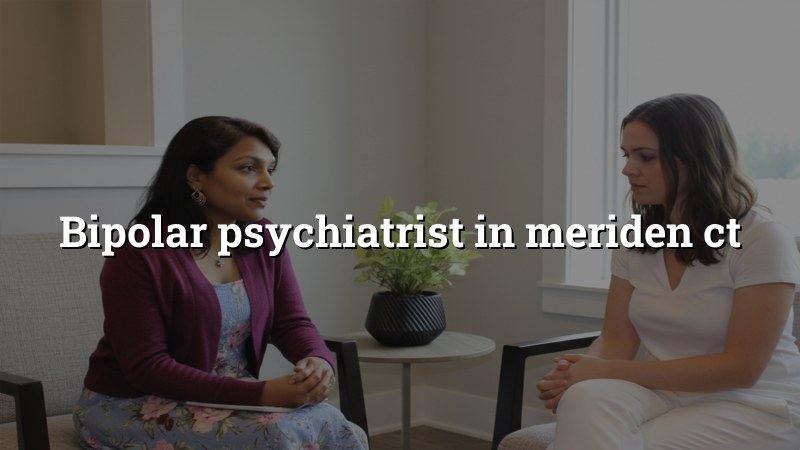
Getting a proper evaluation is the first step — and it's a real conversation, not a questionnaire you fill out in a waiting room. Sindhia will ask about your history, your patterns, what's worked and what hasn't. From there, a plan might include mood stabilizers, certain antidepressants used carefully, or other medications shown to work specifically for bipolar disorder. She schedules regular follow-ups so adjustments can happen when they need to — not when you finally hit a crisis. And if telehealth works better for your schedule, she offers that for all of Connecticut, including Meriden.
Frequently Asked Questions
Serving Meriden, CT and all of Connecticut via telehealth.
Call (860) 515-8689 or book online below.
Book an Appointment